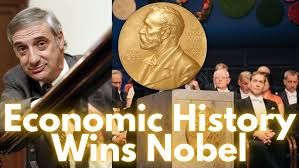
This year, the Nobel Prize in economics was awarded jointly to three people. One of the winners was economic historian Joel Mokyr, who shared the prize with economists (and team-mates) Phillippe Aghion and Peter Howitt. Let’s start with Joel Mokyr’s work. Mokyr’s answer centers on the role of knowledge in society. He describes two types of knowledge. On one side is propositional knowledge, which requires understanding why things work—physics, chemistry, mathematics, and other aspects of science. On the other side lies prescriptive knowledge. That’s knowing how to actually do things—recipes, techniques, practical instructions. Mokyr says that economic growth, as we know it, began when these two types of knowledge started interacting with — and feeding — each other Mokyr credits Francis Bacon, the famous 17th-century philosopher, who argued that the purpose of knowledge shouldn’t merely be to satisfy curiosity, but to improve the human condition. He believed strongly that natural philosophy and useful knowledge can be combined to solve technological problems. And that idea spread like wildfire among like-minded people over time. Successes in practice validated scientific theories made in the lab — and science, in turn, improved practical techniques in the factory. Finally, theory and practice fed strongly into each other. So that’s what Mokyr emphasises. For economic growth to work, openness to ideas, scientific inquiry, and institutions that support these ideas are necessary. Without these, economic growth will cease to work. In fact, Mokyr strongly believes that knowledge matters just as much as capital or technology. But Mokyr identifies another critical factor: societies had to be open to change. ( compiled nector from a long article on Nobel prize )


© 2024 All copyrights reserved by imagenshape