The Geopolitics of Cat and Mouse: Is the US-Iran Conflict an Animated Loop?
Article by Sanjay Punjabi 24 Apr, 2026 Linkdin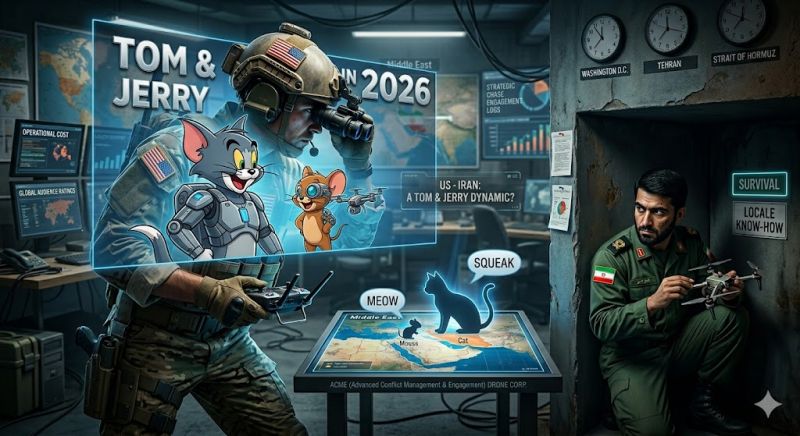
Growing up, we saw Tom & Jerry as a simple comedy of errors. In 2026, as we watch the escalating conflict between the United States and Iran, that childhood cartoon feels less like a joke and more like a prophetic metaphor for modern warfare. When you strip away the press releases and the military jargon, the dynamics are eerily familiar. 1. The Illusion of Scale The "Cat" (the US) is the undisputed master of the house. It has the size, the global reach, and an arsenal of sophisticated "ACME" gadgets—from stealth bombers to carrier strike groups. The "Mouse" (Iran) is confined to the corners, operating from a position of geographic and economic constraint. The Paradox: In the cartoon, no matter how many grand traps the Cat sets, the House is never quite "cleared." In geopolitics, sheer scale does not always equal a definitive victory. 2. Asymmetric Retaliation: Using the Cat’s Weight Against It Jerry never wins by out-powering Tom; he wins by out-maneuvering him. Tom uses a hammer; Jerry uses the momentum of that hammer to stub Tom’s toe. In 2026, we see this in "Grey Zone" warfare. The US uses heavy economic sanctions and conventional naval power; Iran retaliates using the "core principles" of the Cat’s own pressure—targeting global energy bottlenecks like the Strait of Hormuz or using low-cost drone swarms to challenge billion-dollar defense systems. 3. The Neighborhood Watch (Allies vs. Lone Rangers) The Cat usually has the "neighborhood" on its side—allies, formal treaties, and institutional backing. The Mouse? He is often a lone actor, relying on his intimate knowledge of the "walls" (his own terrain) and a few unlikely proxies to survive. 4. The Metaphor of "Food & Life" In the animation, the fight is often over a fridge—a surplus of resources. For Tom, it’s a game of ego and domestic order. For Jerry, it’s survival. When we look at the current war: For a superpower, the conflict is often about influence and the "rules of the house." For the smaller player, the conflict is about the right to exist in the corner. The Bottom Line for Business Leaders In an animated loop, the furniture gets broken, the house gets trashed, but the chase never truly ends. As professionals, we have to ask: At what point does the cost of the "chase" exceed the value of the "house"? When the giants of the world engage in a Tom & Jerry cycle, it’s the global supply chain, the energy markets, and the "bystanders" who end up paying for the broken furniture. Is it time to stop the loop, or are we destined to watch the same episode on repeat? #Geopolitics #USIran #StrategicThinking #Leadership #InternationalRelations #BusinessResilience #AsymmetricWarfare


© 2024 All copyrights reserved by imagenshape